
What foam is best for Pro-Audio gear?
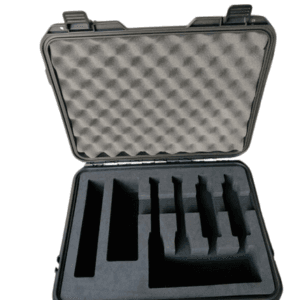
For heavy stage gear and rack-mount units, a Dual-Stage Foam Strategy is the industry standard. This involves using high-density Polyethylene (PE) for the structural base to support the weight of heavy amplifiers, paired with soft Polyurethane (PU) or “Egg-crate” foam in the lid to dampen high-frequency vibrations that can loosen internal solder joints and ribbon cables during transit.
For a touring engineer or a rental house manager, a flight case isn’t just a box—it’s a mobile insurance policy. Pro-audio gear lives a violent life: it’s vibrated for 500 miles in the belly of a semi-truck, dropped by stagehands on gravel, and pushed through humid outdoor festivals.
When you’re protecting a $60,000 DiGiCo mixing console or a rack of high-end wireless receivers, the difference between “show-ready” and “dead-on-arrival” is the engineering of the foam inside.
1. The Silent Killer: Low-Frequency Vibration
While a 3-foot drop is the most obvious threat, vibration causes more long-term damage to audio gear than impact. Constant “road hum” at 50–100Hz can cause:
- Mechanical Fatigue: Screws backing out of chassis.
- Contact Failure: Ribbon cables and XLR pins vibrating loose from their sockets.
- Component Stress: Heavy capacitors on PCBs snapping their legs due to micro-oscillations.
The Foamkart Solution: We utilize shock-isolation mounts carved directly into the foam. By calculating the “Static Loading” (the weight of the gear divided by the surface area of the foam), we ensure the gear is suspended in its “sweet spot”—soft enough to absorb road hum, but firm enough to prevent the gear from hitting the outer plywood walls during a bump.
2. Rack-Mount Protection: The “Floating” Rack
Standard 19-inch racks bolted directly to a case offer zero shock protection. Professional “Shock-Racks” use a case-within-a-case design.
Feature | Protection Mechanism | Pro-Audio Benefit |
Foam-Encased Inner Sleeve | 1″ to 2″ of high-density PE foam between the inner rack and outer case. | Isolates delicate vacuum tubes and digital processors from external impact. |
Rear-Support Blocking | Custom foam blocks that support the back of deep amplifiers. | Prevents the rack ears from bending or snapping under the weight of heavy power transformers. |
Ventilation Channels | CNC-cut air gaps in the foam. | Allows gear to stay cool if operated while still in the bottom tray of the case. |
3. Engineering for “The Road”: Durability & Logistics
Stage gear needs to be “Plug-and-Play.” If you have to spend 20 minutes digging cables out of a bag, your case design has failed.
The “Doghouse” and Cable Runs
Foamkart designs custom “Doghouse” cavities—recessed areas behind a mixing console or rack where cables can remain plugged in during transit. We carve cable paths that maintain the proper “bend radius” for fragile fiber optic or Cat6e lines, ensuring they aren’t pinched or kinked when the lid is slammed shut.
Humidity and “The Festival Factor”
Outdoor gigs mean rain and humidity. Standard open-cell foam acts like a sponge, trapping moisture against your metal gear and causing oxidation.
- Closed-Cell Advantage: We use XLPE (Cross-Linked Polyethylene) for the base layers. It is 100% waterproof and won’t trap “sweat” or condensation, protecting your faders and pots from “scratchy” audio caused by corrosion.
The Road-Ready Checklist
When designing your next tour kit, consider these three “Stress Points”:
1. Static Load Balancing Choose the right density
Ensure the foam density matches the gear weight. An amp rack needs 2.2lb density PE, while a microphone kit might only need 1.5lb XLPE.
2. Thermal Management Avoid heat traps
Identify which units get hot (amps, servers). Design “relief cuts” in the foam to allow air to circulate around the heat sinks.
3. Peripheral Integration The ‘One-Box’ rule
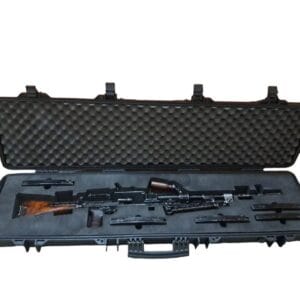
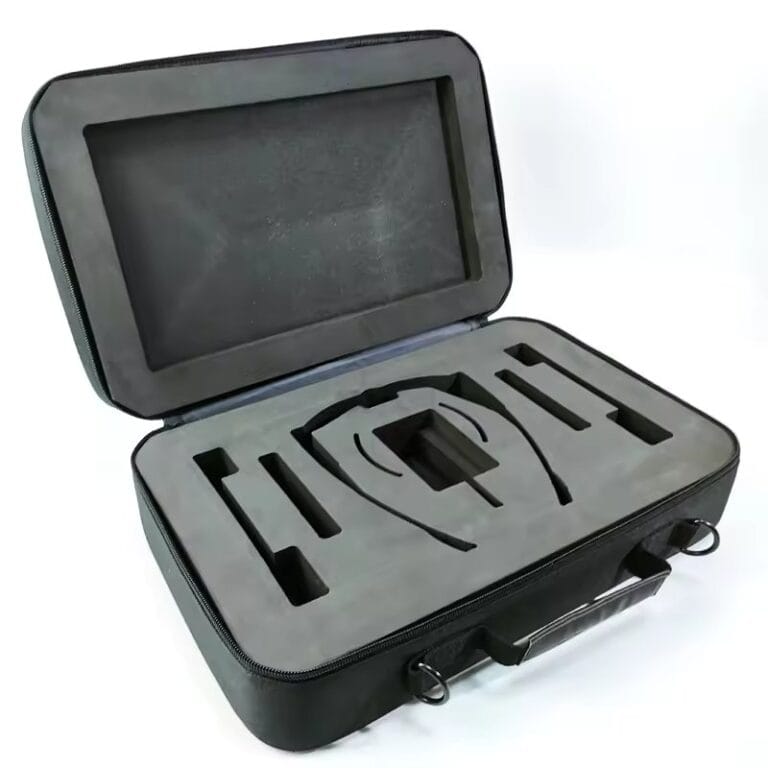
Map out cavities for antennas, power cables, and specific tools. If everything has a shadow-slot, you’ll never leave a $500 measurement mic at a venue again.
The Professional Edge: A custom Foamkart insert doesn’t just protect gear; it protects your schedule. By standardizing your pack-outs and ensuring gear survives the “truck-pack,” you eliminate the “repair day” between tour stops.