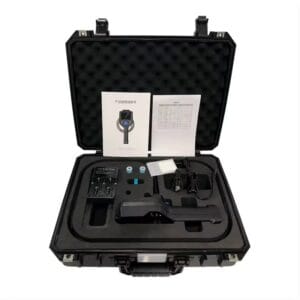

In a busy manufacturing plant, a maintenance facility, or an aerospace hangar, tools are a massive investment. If a technician drops a high-calibration torque wrench on a concrete floor, or if a specialized cutting tool gets nicked during transport, the resulting downtime can stall an entire production line.
Furthermore, industrial tools have an annoying habit of growing legs and walking away when they lack a dedicated home. Relying on generic toolboxes where wrenches and sockets rattle against each other causes cosmetic damage, calibration drift, and endless wasted hours searching for missing items. Transitioning to engineered foam for industrial tools solves these problems by blending physical protection with organized efficiency.
The best foam for industrial tools is high-density Polyethylene (PE) or Ethylene-Vinyl Acetate (EVA) foam, typically ranging from 2.2 pounds to 4 pounds in density. These closed-cell materials provide the structural integrity required to hold heavy metal tools in place, resist degradation from industrial oils and fluids, and do not absorb moisture. For lean manufacturing and 5S tool shadowing, a multi-colored foam system using a dark top layer over a bright yellow or red base layer is ideal to immediately signal when a tool is missing from its workstation.
SURVIVING THE INDUSTRIAL ATMOSPHERE
Industrial environments are notoriously harsh on packaging materials. A standard foam insert used for consumer electronics will quickly fall apart in a machine shop. High-quality foam for industrial tools must handle three distinct threats.
First, there is fluid exposure. Tools are frequently coated in cutting oils, lubricants, hydraulic fluids, or solvents. Open-cell foams absorb these liquids like a sponge, turning your toolbox into a soggy, chemical-soaked hazard that ruins tool grips and accelerates rust. Closed-cell PE and EVA foams are completely hydrophobic and chemically inert. Oils stay on the surface and can be wiped clean without degrading the foam structure.
Second, there is mechanical wear. Heavy steel tools have sharp edges, threads, and points. The foam must be tough enough to withstand repeated insertion and removal without tearing, pitting, or flaking. High-density closed-cell foam resists abrasion, ensuring that the custom cutouts maintain their tight fit for years of daily use.
CHOOSE YOUR MATERIAL: PE VS EVA
When designing custom inserts for heavy machinery parts or hand tools, two materials stand out as industry favorites.
Option A: Polyethylene (PE) Foam PE is the ultimate utilitarian choice. It is highly rigid, cost-effective, and excels at handling heavy components. If you are creating large foam blocks to cradle a spare CNC spindle head or heavy milling cutters, PE is the standard. It provides exceptional impact absorption and keeps heavy items from shifting during transport.
Option B: Ethylene-Vinyl Acetate (EVA) Foam EVA has a more rubbery, premium feel compared to standard PE. It offers incredible tear resistance and superior compression recovery, meaning it bounces back perfectly even after a heavy impact. EVA is the preferred choice for premium hand tool kits, mobile maintenance carts, and high-end diagnostic equipment boxes. It looks highly professional and stands up to the most demanding field conditions.
5S LEAN METHODOLOGY AND TOOL SHADOWING
Beyond physical protection, the main reason industrial operations invest in custom tool foam is organization, specifically through the 5S Lean methodology (Sort, Set in order, Shine, Standardize, Sustain).
Tool shadowing uses CNC-routed foam inserts to create a visually perfect layout where every tool has one exact home. Foamkart achieves this by using a dual-color foam strategy. The top layer of the foam is typically a dark color like black or deep blue, while the underlying layer is a bright, contrasting color like neon yellow, orange, or red.
When a tool is removed from the tray, the bright bottom layer is exposed, creating a high-visibility shadow. This allows a supervisor or technician to scan a workspace in less than two seconds and know exactly which tool is missing before a shift ends. This simple visual cue prevents expensive tools from being left inside critical machinery, such as an airplane engine bay, avoiding catastrophic Foreign Object Damage (FOD).
PRECISION CNC ROUTING VS MANUAL CUTTING
Some operations try to save money by purchasing blank foam sheets and having technicians cut out shapes using a utility knife. This approach is rarely efficient. Manual cutting is incredibly slow, creates jagged edges that trap dirt, and lacks the depth control required to keep tools level.
Precision CNC routing allows for true three-dimensional depth mapping. If a custom pneumatic tool is thicker on one end than the other, the CNC machine carves a pocket with varying depths to ensure the tool sits perfectly flat and flush with the top of the foam. Finger lifts or relief cutouts are also machined into the edges, allowing workers to easily get their fingers under the tool for a fast, ergonomic grip.
CONCLUSION
Investing in engineered foam for industrial tools is an investment in operational efficiency. It moves your facility away from disorganized, noisy tool chests and introduces a system of predictable protection and visual accountability. By matching your tool weights with the right density of PE or EVA foam, you eliminate tool damage, drastically cut down on asset replacement costs, and optimize your team’s daily productivity.