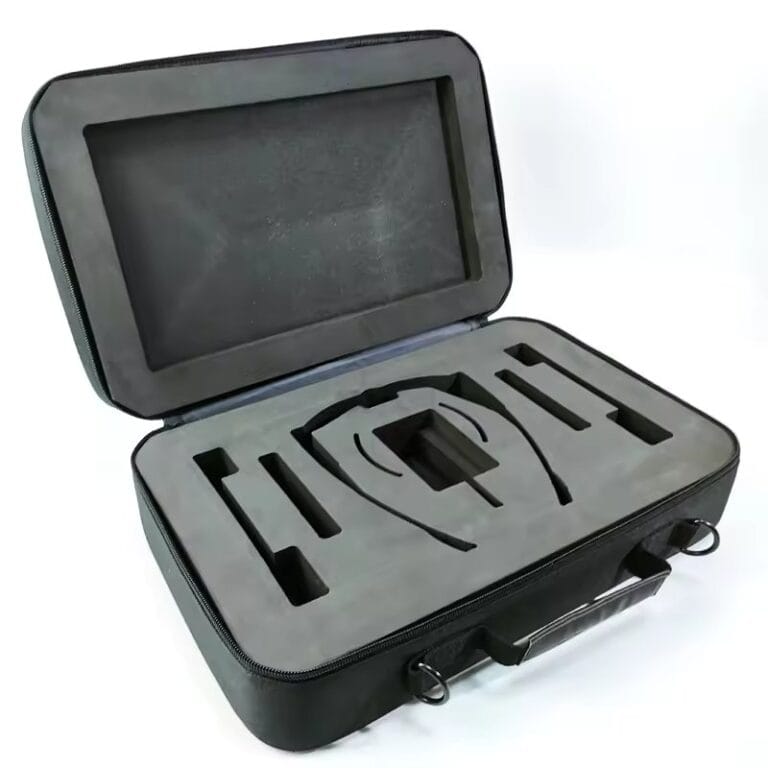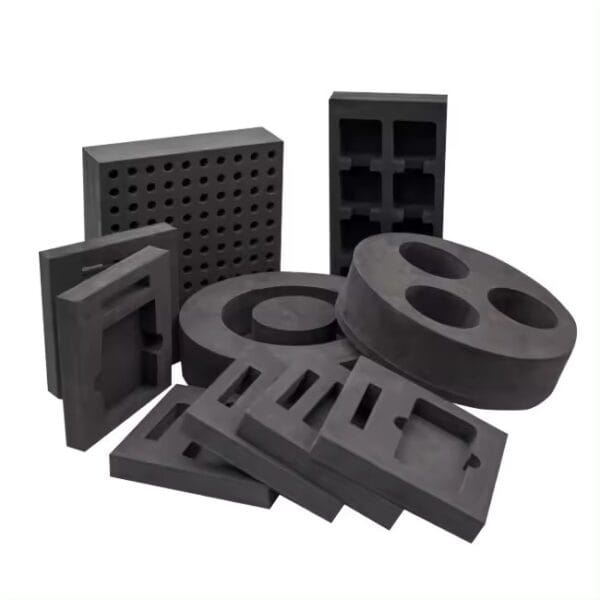

esd vs anti static foam is a comparison that every electronics manufacturer and shipping professional needs to master in 2026. While they may look identical to the untrained eye, choosing the wrong material can lead to catastrophic hardware failure.
The stakes are higher than ever as microchips become smaller and more sensitive to static discharge. Understanding the nuance between these two materials isn’t just a technicality—it’s a requirement for modern quality control.
1. The Core Physics of Protection
When analyzing esd vs anti static foam, we must first look at how they handle electricity. Anti-static foam is treated with a chemical agent that prevents the generation of static electricity caused by triboelectric charging (friction).
In contrast, ESD (Electrostatic Dissipative) foam is designed to actually “bleed” charges away from the component. It doesn’t just stop the creation of a charge; it provides a controlled path to the ground.
2. Surface Resistivity Levels
The primary technical differentiator in the esd vs anti static foam debate is surface resistivity. We measure this in Ohms ($\Omega$).
- Anti-Static Foam: Typically has a surface resistivity between $10^{10}$ and $10^{12} \Omega$ per square.
- ESD (Dissipative) Foam: Falls into the range of $10^{6}$ to $10^{9} \Omega$ per square.
As the resistance decreases, the material becomes more conductive. ESD foam sits in that “sweet spot” where it moves electricity fast enough to be safe, but slow enough to prevent a sudden spark.
3. Longevity and “Shelf Life”
A major point in the esd vs anti static foam comparison is how long the protection lasts. Anti-static foam is often “topically treated.” Over time, or in low-humidity environments, this chemical coating can wear off or evaporate.
ESD foam, specifically the black conductive variety, usually has carbon impregnated directly into the cellular structure. This means the protection is permanent and won’t diminish even after years of use.
4. Visual Identification and Color Coding
In the world of esd vs anti static foam, color is your first clue.
- Pink Foam: Almost always signifies anti-static properties. It is the industry standard for “low charging” materials.
- Black Foam: Usually indicates ESD or conductive properties.
Warning: Never assume a foam’s properties based on color alone. Always verify with a surface resistivity meter to ensure compliance with ANSI/ESD S20.20 standards.
5. Cost-Effectiveness vs. Performance
If you are shipping low-value items that aren’t inherently sensitive but need to avoid “cling,” anti-static foam is the budget-friendly winner. However, for high-value PCBS or sensors, the slightly higher cost of ESD foam is an insurance policy against thousands of dollars in losses.
Feature | Anti-Static Foam | ESD (Dissipative) Foam |
Primary Color | Pink | Black |
Mechanism | Inhibits charge generation | Dissipates existing charges |
Permanence | Temporary/Topical | Permanent |
Best For | Non-sensitive parts in proximity to electronics | Direct contact with sensitive components |
6. Humidity Dependence
Anti-static foams often rely on drawing moisture from the air to work. In 2026, as more manufacturing moves to climate-controlled or arid environments, this becomes a liability. Because esd vs anti static foam differ in their chemical makeup, the ESD variant remains reliable even in 0% humidity, whereas anti-static foam may fail.
7. Environmental Impact and Outgassing
For cleanroom environments, the chemicals used in anti-static foam can sometimes “outgas,” leaving a residue on sensitive optical components. ESD foams, particularly those made from cross-linked polyethylene, are much cleaner and preferred for aerospace or medical applications.
Conclusion: Which Should You Choose?
In the battle of esd vs anti static foam, the winner depends on your specific use case. If you are wrapping a manual or a plastic chassis, pink anti-static foam is sufficient. But for the “brains” of your device, black ESD foam is non-negotiable.
For more information on proper storage, check our Internal Guide to Warehouse Safety or consult the latest IEEE Electronics Guidelines.