
Die Cut vs CNC Foam
Die-cutting is best for high-volume production (1,000+ units) of relatively simple, 2D shapes. It uses a physical steel-rule die to “stamp” shapes out of foam sheets, offering a low per-unit cost but requiring an upfront tooling investment. CNC foam cutting is better for low-to-medium volumes or highly complex 3D shapes. It uses a computer-controlled router or wire to carve foam without physical molds, allowing for varied depths (Z-axis) and zero upfront tooling costs.
Choosing the wrong one doesn’t just hurt your bottom line; it can compromise the very protection you’re trying to build. Die-cutting is a “brute force” high-speed solution, while CNC is a “surgical” precision method. Understanding which one fits your production scale and part complexity is the difference between a successful rollout and a logistical headache.
1. Die-Cutting: The High-Speed Press
Die-cutting is essentially a giant, industrial-strength cookie cutter. A “steel rule die”—a custom-made plywood board with sharp steel blades bent into the shape of your part—is pressed into the foam with several tons of force.
The Advantages of Die-Cutting
- Blistering Speed: Once the die is loaded, a press can pop out an insert every few seconds. If you need 10,000 identical e-commerce inserts, die-cutting is the only logical choice.
- Lower Unit Cost: Because the labor-per-part is so low, your price-per-piece drops significantly as volume increases.
- Consistency: Every part is a 100% exact replica of the steel rule die.
The Trade-offs (The “Hidden” Costs)
- Tooling Investment: You have to pay for the physical die (usually $150–$600+ depending on complexity) before the first part is even made.
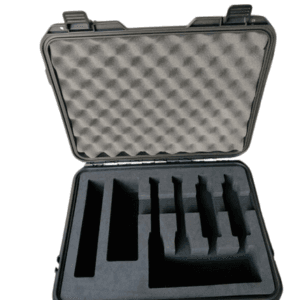
- Z-Axis Limitations: Die-cutting is inherently 2D. You cannot have “steps” or varying depths within a single sheet of foam. To get different depths, you have to die-cut multiple layers and glue them together (laminating), which adds labor cost back in.
- The “Concave” Edge: Because die-cutting uses pressure, the foam compresses slightly before the blade cuts through. This results in a slightly “dished” or “concave” edge on thicker foams (anything over 1 inch).
2. CNC Foam Cutting: The Precision Carver
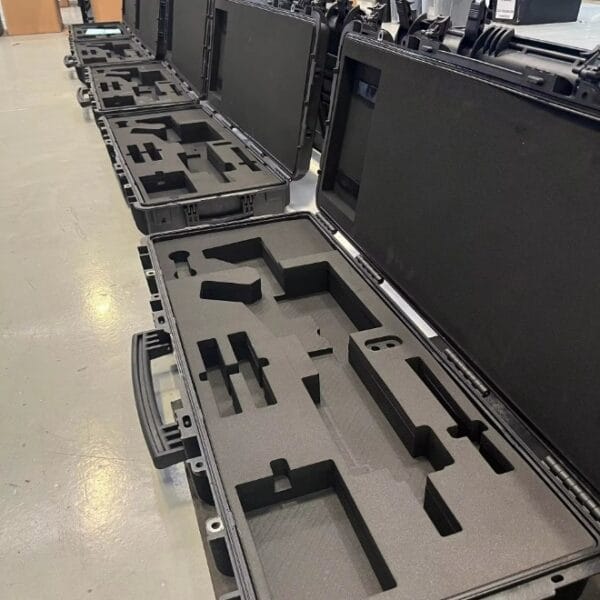
CNC (Computer Numerical Control) cutting uses either an oscillating knife, a high-speed router bit, or a hot wire to “carve” the foam based on a CAD (Computer-Aided Design) file.
The Advantages of CNC
- Zero Tooling Fees: There is no physical mold. If you want to change your design tomorrow, we just update the digital file. This makes it perfect for prototyping and small-to-medium runs.
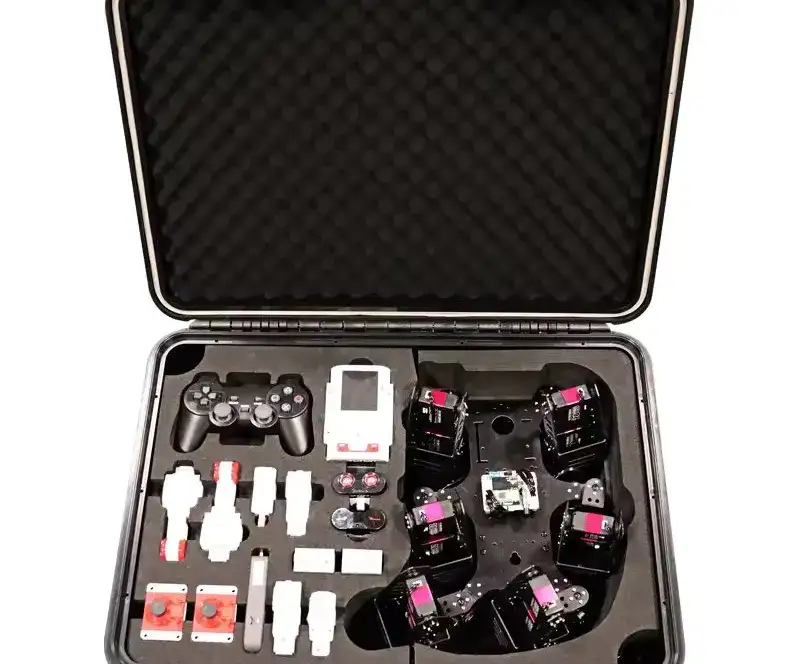
- True 3D Complexity: CNC is where we create “cradles.” We can route a pocket that is 1 inch deep on the left and 2.5 inches deep on the right, perfectly matching the contours of a camera lens or a medical tool.
- Clean, Vertical Edges: Because there is no compression from a press, the edges are perfectly vertical and crisp, regardless of foam thickness.
- Large-Format Capability: We can CNC-cut massive blocks of foam (up to several feet thick) that a die-press could never penetrate.
The Trade-offs
- Production Time: Carving a part takes longer than stamping one. For massive runs, the machine time starts to drive the price higher than a die-cut alternative.
- Kerf Waste: The router bit has a thickness (the “kerf”). This means you lose a small amount of material between parts, which can lead to slightly less efficient material yield compared to a thin steel blade.
3. Side-by-Side Comparison
Feature | Die-Cut Foam | CNC Foam Cutting |
Best Volume | 1,000+ Units | 1 to 500 Units |
Upfront Cost | High (Tooling/Die fees) | Zero |
Lead Time | Longer (Must wait for die) | Instant (Digital setup) |
Edge Quality | Slightly concave on thick foam | Perfectly vertical/90° |
Depth Control | Single depth per sheet | Infinite Z-axis depths |
Design Changes | Expensive (New die required) | Free (Update CAD file) |
4. How to Choose: The Decision Framework
Before committing to a production method, run your project through this four-step logic gate.
1.Evaluate Your Volume:The 500-unit threshold.
If you need fewer than 200–300 units, CNC is almost always cheaper because you avoid the $300+ die fee. If you need 2,000, die-cutting wins on speed.
2.Assess the ‘Z-Axis’:Flat vs. Contoured.
Look at your product. Does it need a simple hole (flat) or a contoured nest that matches its shape (3D)? For contoured nesting, CNC is the superior choice.
3.Check Material Thickness:The 1-inch rule.
If your foam is thicker than 1.5 inches and you need clean edges, die-cutting will likely “squish” the edges. CNC will maintain a professional, high-end look.
4.Determine Design Stability:Will it change?.
If your product is a prototype or likely to have a “Version 2.0” in six months, avoid die-cutting. CNC allows you to pivot your design without throwing away expensive tooling.
5. The Hybrid Approach: The Best of Both Worlds
For some clients, Foamkart uses a hybrid strategy. We may die-cut the outer perimeter of a high-volume part to save time, then use CNC routing to carve out the complex internal “nest” for the equipment. This balances the speed of the press with the precision of the computer.
Pro Tip: If you are a B2B company shipping a high-value item, the CNC-cut look is often preferred even at higher volumes because it signals “custom engineering” to the end user. Die-cutting, while efficient, often looks like commodity packaging.