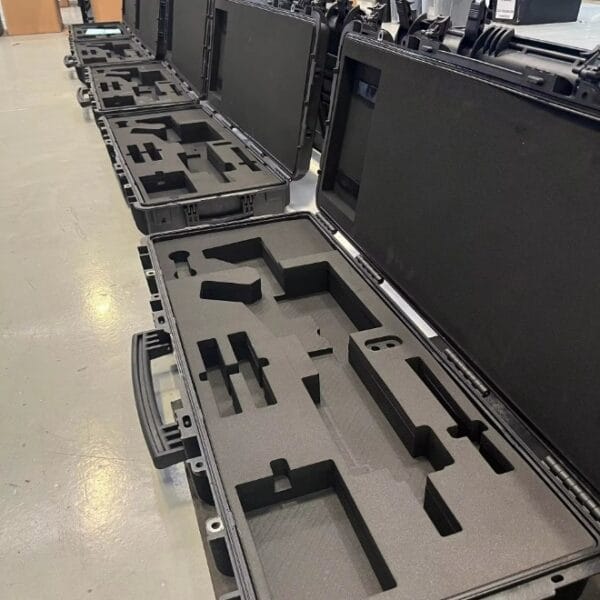

aerospace foam packaging represents the pinnacle of protective engineering in 2026. When moving a turbine blade or a satellite sensor, the margin for error is zero. These components are often as fragile as they are expensive, requiring a housing that can withstand extreme G-forces and temperature fluctuations.
Standard bubble wrap or generic foam isn’t enough. The aerospace industry demands a level of precision and material science that transforms packaging into a high-tech tool of its own.
1. Precision Vibration Dampening
The primary role of aerospace foam packaging is to neutralize vibration. During transit, parts are subjected to a wide spectrum of frequencies. Using materials like Zotefoams or high-density Polyethylene (PE), engineers can calculate the exact “cushion curve” needed to protect a part.
The formula for shock protection often involves calculating the static stress (sigma):
sigma = \frac{W}{A}
Where W is the weight of the component and A is the bearing area of the foam. By optimizing this, aerospace foam packaging ensures the component “floats” within its container.
2. Compliance with Flame Retardancy Standards
Safety in aviation starts on the ground. One of the most incredible benefits of modern aerospace foam packaging is its adherence to strict fire safety codes. Materials must often meet FAR 25.853 standards, ensuring that if a fire occurs during transport, the packaging won’t act as a fuel source.
This fire-resistant property is achieved through specialized chemical additives that make the foam self-extinguishing.
3. Resistance to Hydraulic Fluids and Chemicals
Aerospace environments are messy. Components are often coated in lubricants, or they may be exposed to Skydrol (hydraulic fluid) during the maintenance cycle. Generic foams would dissolve or “melt” when in contact with these harsh chemicals.
However, high-end aerospace foam packaging utilizes cross-linked foams that are chemically inert. This prevents the packaging from breaking down and contaminating the very parts it is meant to protect.
4. Custom CNC Machining and Shadow Boarding
Modern aerospace foam packaging isn’t just a box; it’s an organization system. Using CNC routing and water-jet cutting, foam inserts are tailored to the exact geometry of a tool or component.
- FOD Prevention: Foreign Object Debris (FOD) is a major risk in aerospace. Custom foam “shadow boards” allow technicians to see instantly if a tool is missing.
- Kitting: Multiple parts for a single assembly can be housed in one custom insert, streamlining the workflow for engineers.
5. Reusability and Sustainability in 2026
While the initial investment in aerospace foam packaging is higher than single-use alternatives, the durability of these materials makes them incredibly sustainable. A well-designed nitrogen-blown foam case can be reused for hundreds of shipments over several years.
This reduces the “cost-per-trip” significantly. Furthermore, many of the polymers used in aerospace foam packaging are now being manufactured with recycled content to meet 2026 environmental targets.
How to Implement Aerospace-Grade Solutions
Transitioning to high-spec packaging requires a deep dive into your supply chain. You should consult with NASA’s Technical Reports Server for data on material outgassing or view our Internal Case Study on Logistics.
Expert Insight: Always request a “Drop Test” report for your specific foam configuration to ensure it meets MIL-SPEC requirements.
Conclusion: Protecting the Future of Flight
As we push further into space exploration and faster-than-sound commercial travel, the role of aerospace foam packaging only grows. It is the silent guardian of the world’s most advanced technology.