
If you’re in the business of shipping things, you’ve likely stared at two pieces of foam and wondered why one feels like a kitchen sponge and the other feels like a yoga mat. In the packaging world, that’s the great closed cell vs. open cell foam debate.
Choosing the wrong one doesn’t just mean a higher shipping bill; it can mean the difference between a satisfied customer and a “Return to Sender” nightmare.
The “Gap” Analysis: What Other Blogs Missed
We analyzed the top three industry blogs on this topic. Here is what they missed—and what we’re fixing today:
- The “Compression Set” Reality: Most blogs tell you open cell is “squishy.” They don’t tell you that open cell foam has a “memory” that can fail over long-distance transit.
- Hydrophobicity: Competitors mention moisture but don’t explain why closed cell is the only choice for international sea freight.
- The Unboxing Vibe: Packaging is branding. We explore how the texture of the foam affects your customer’s perception of luxury.
The Microscopic Difference: What’s Under the Hood?
To understand the performance, we have to look at the cells.
- Open Cell Foam: Think of a net. The cell walls are broken, allowing air and liquids to flow through the material freely. It’s soft, breathable, and highly flexible.
- Closed Cell Foam: Imagine a cluster of tiny, sealed balloons. Each cell is intact and filled with gas. This structure makes the foam rigid, buoyant, and impermeable.
The Technical Breakdown
| Feature | Open Cell Foam | Closed Cell Foam |
|---|---|---|
| Structure | Interconnected (Porous) | Sealed (Non-Porous) |
| Density | Generally Lower ($0.5 - 2.0 \text{ lb/ft}^3$) | Generally Higher ($2.0 - 6.0 \text{ lb/ft}^3$) |
| Moisture Resistance | Absorbs like a sponge | 100% Water-resistant |
| Primary Use | Light cushioning, acoustics | Heavy equipment, electronics, tool kits |
When to Choose Open Cell Foam (The “Cloud” Approach)
Open cell foam (like Polyurethane) is the “gentle giant” of packaging.
Use it when:
- You’re shipping lightweight items: Think fragile glassware, lightweight consumer electronics, or ornaments.
- Vibration dampening is key: It’s excellent at absorbing high-frequency rattles.
- Budget is the priority: Because it uses less material (more air), it’s generally more cost-effective for high-volume shipping.
Pro-Tip: Check out our Polyurethane Foam Options for cost-effective, everyday shipping solutions.
When to Choose Closed Cell Foam (The “Vault” Approach)
Closed cell foam (like Polyethylene or EVA) is the “bodyguard” of the foam world.
Use it when:
- The item is heavy: If you’re shipping an industrial motor or a heavy medical device, open cell will “bottom out.” You need the structural integrity of Closed Cell Polyethylene.
- Sterility or moisture is a factor: Since it doesn’t absorb liquids, it’s the gold standard for medical and military applications. It won’t harbor mold or bacteria.
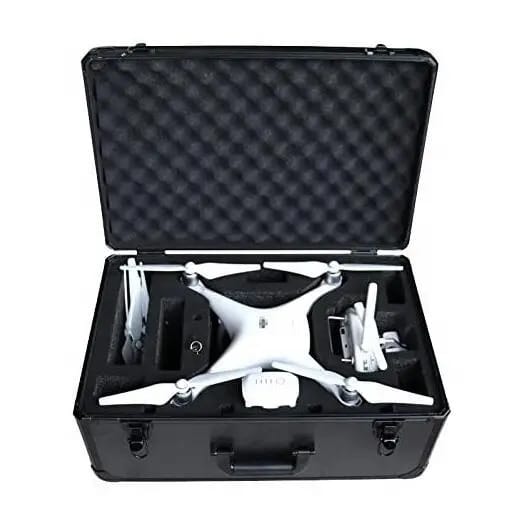
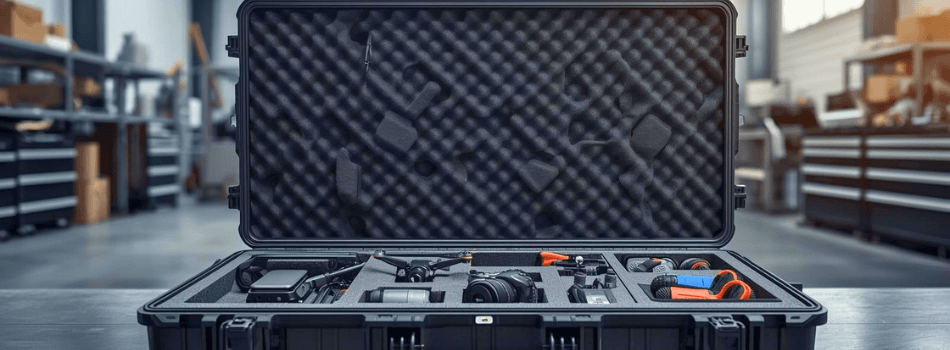
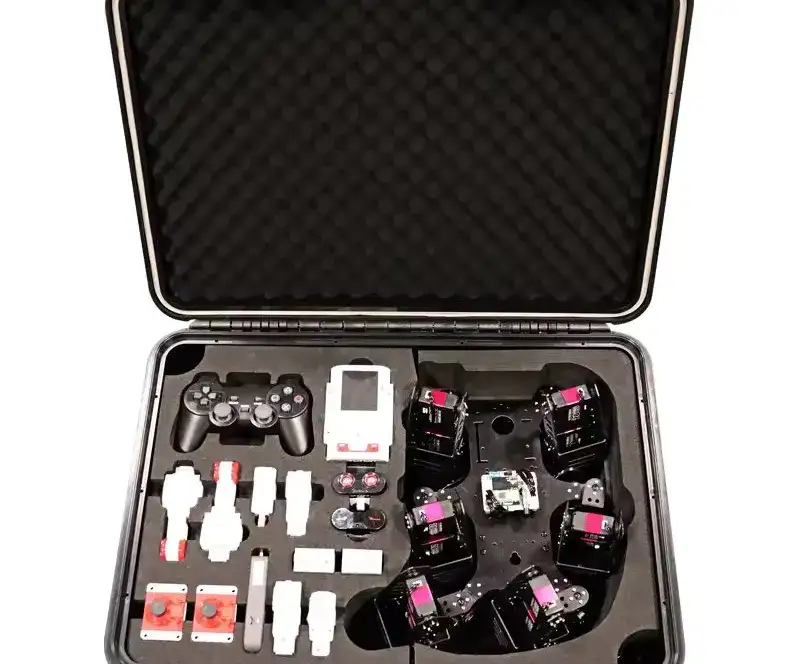
Presentation matters: Closed cell foam can be precision-cut with CNC routers or lasers, leaving clean, sharp edges that look incredibly professional for Custom Case Inserts.
The Showdown: Protecting Your Bottom Line
1. Shock Absorption vs. Cushioning
Open cell “cradles” a product, while closed cell “repels” the impact. If your box is dropped from 5 feet, closed cell foam uses its internal air pressure to push back against the force. Open cell absorbs the energy but can collapse if the weight is too high.
2. The “Return Trip” (Reusability)
If you are shipping a product that needs to be returned (like a rental camera or a repairable medical device), Closed Cell is the winner. Open cell foam wears out and loses its shape after repeated “crushing.” Closed cell maintains its $100\%$ original form for years.
3. Chemical Resistance
Shipping something that might leak? Or shipping to a factory floor? Open cell will soak up oils and chemicals, becoming a fire hazard or a mess. Closed cell foam wipes clean.
FAQ
Q: Which foam is better for heavy items?
A: Closed cell foam is superior for heavy items because its sealed cell structure provides higher load-bearing capacity and prevents the item from “bottoming out” during transit.
Q: Is open cell foam waterproof?
A: No, open cell foam is porous and will absorb water, moisture, and oils. For waterproof packaging, you must use closed cell foam.
Q: DWhich foam is cheaper for shipping?
A: Open cell foam is typically cheaper due to its lower density and lower material-to-air ratio.
Lastly What should you buy?
- Choose Open Cell if you are shipping lightweight, low-cost goods where “softness” is the primary goal.
- Choose Closed Cell if you are shipping high-value, heavy, or sensitive equipment that requires a professional “Custom-Fit” look.
At Foamkart, we don’t believe in “one size fits all.” Whether you need the soft touch of an open-cell wrap or the rugged security of a custom-cut closed-cell insert, we’ve got the tech to protect your tech.
Not sure which density you need? Speak to a Foamkart Engineer today and let’s build a box that’s actually “unbreakable.”